Nervous System Safety and Capacity for Writers Writing About Trauma
Writing your story can be a powerfully healing process.
Studies have shown that expressive writing can help people who have experienced trauma feel more resilient, less stressed, and less stuck in repetitive thought patterns (for examples, see: The Event-Specific Benefits of Writing About a Difficult Life Experience, Writing about emotions may ease stress and trauma from Harvard Health Publishing, and Writing to Overcome Trauma and Improve Your Mental and Physical Health.)
But I think as writers and as survivors of trauma, we have to be really mindful of how we go about the writing.
It can be re-traumatizing if you are without support and/or going too fast.
I’m currently doing some writing about a difficult period of my life back in 2012, and I’ve been thinking about this a lot—how we need to protect ourselves and be gentle with ourselves when writing about past trauma.
We need reminders to:
Slow down or stop
Allow ourselves permission to change our minds
Ask for help
Cry, feel, rage, release, and be with everything that comes up—with safety and containment around what we’re doing
The memories I’m exploring have sat unexplored for the majority of a decade, honestly…
Even with all of the therapy and healing I’ve done over that period of time, I still wasn’t ready until very recently to even look at those things again.
Fear. Shame. Overwhelm.
These are all things we have to pay attention to when we journey back into those ‘dark night of the soul’ moments from our lives.

I've seen this with clients, too. Memoirists writing about coercive control, domestic violence, and childhood trauma. Non-fiction authors writing about the challenges they grew up with, how those experiences shaped them.
Pretty much every author I’ve worked with, whether they’re exploring past trauma or not, has some form of creative trauma that haunts them. A moment of rejection. A moment from a writing class where they felt singled out or made fun of. A time when someone’s words shut them down and made them feel not good enough, alone, or unworthy.
All of this comes up when we write!
There’s so much potential for healing when we write.
But we need safety measures, support, guidance, and protection, or else the creative process can unfortunately do harm.
So, gently we go.
There are many ways to make the writing experience safer. My goal as a writing coach is always to help you feel empowered and in control of your creative process.
You decide what to write about and how much you want to share. Not every story has to be included, and the level of detail is up to you.
There’s no rush. You get to take your time! There is no rush to write everything right away. You can take it one step at a time, easing into the process with lighter memories and slowly moving toward the heavier ones.
You get to take breaks. Lots of breaks! You get to listen to your body and come back to the present moment if you start to feel numb or dissociated. You can get up and walk away from your notebook or computer as often as needed.
You can take entire days, weeks, months, years off, if that what your healing process looks like.
Listening to your body is key. When you notice fatigue, pain, tension, or discomfort, we tend to that. We don’t just power on and ignore what’s coming up for you.
You can work with a trauma specialist, therapist, psychiatrist, psychologist, life coach, or other support professional alongside your writing. In fact, having professional mental health support is highly encouraged, especially if the trauma happened within the last year or two.
Each writing session is contained, meaning there's a clear opening and closing, a beginning and an end, so the memories don't stay with you throughout your day.

You get to celebrate who you are today, focusing on your growth and not only what happened in the past. Even when the story is unfinished, you get to celebrate who you’re becoming.
You get to have extra support after tough writing sessions. Lots and lots of gentleness, compassion, and support.
You’re allowed to comfort your body along the way. I’m talking about cozy blankets! Tea! Restorative yoga! Somatic exercises! Deep breathing! Naps! All of it!
There’s always the option that the only person who reads the stories is you. Even if you start with a dream to publish, that decision can change along the way if you need.
Bottom line: you’re in the driver’s seat. You are empowered. You’re the author, an incredibly resilient creator of your own story.
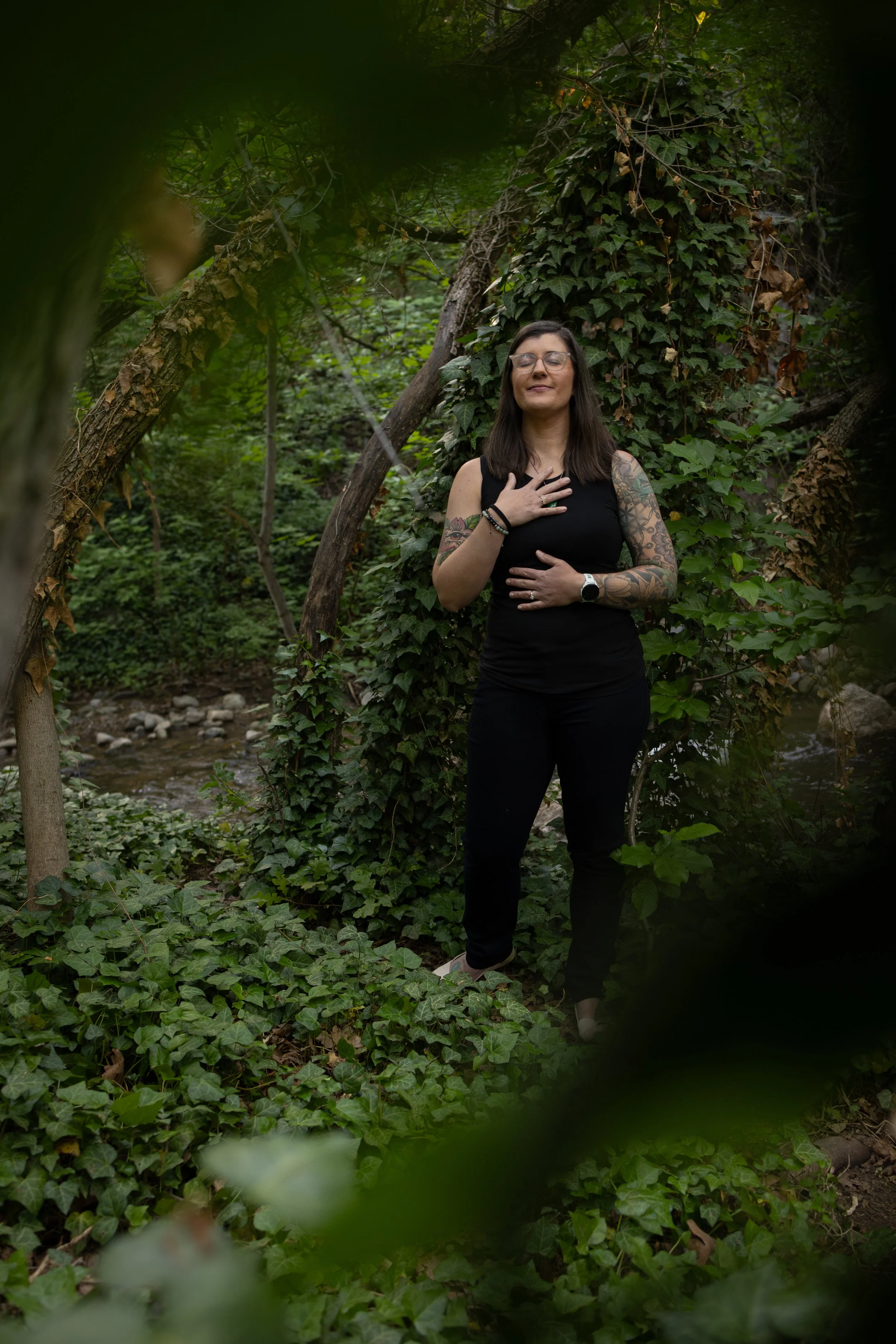
If you've written about trauma before, I'd love to hear in the comments what helped you feel safe in the process.
Other Blog Posts You Might Enjoy:
4 Ways to Protect Your Energy While Writing About Trauma (Guest Post for Writers in the Storm)
Writing a book is an initiation (from the Confident Authors Substack)
Nervous System Safety for Authors (from the Confident Authors Substack)